
Understanding Non-Disclosure Agreements (NDAs) in Business Brokerage
A non-disclosure agreement (NDA) is a standard part of selling a business. It is a signed promise by a buyer to keep what they learn private. It is not a guarantee that nothing will leak, and when you share information still matters. Below is what an NDA is, how it is used in a sale, and what it does and does not do. This is general information, not legal advice.
What is a Non-Disclosure Agreement (NDA)?
A Non-Disclosure Agreement, commonly referred to as an NDA, is a legally binding contract that establishes confidentiality between parties sharing sensitive information. In the context of business brokerage, an NDA is meant to keep proprietary details about a business—such as financial records, customer lists, or operational strategies—from being disclosed to unauthorized individuals or entities. By signing an NDA, the recipient of confidential information agrees to protect it and use it only for the intended purpose, such as evaluating a potential business purchase.
What a typical NDA covers vs. what it does not
| A typical NDA covers | What it does not do |
|---|---|
| Limits how the buyer may use what they are shown, usually to evaluating the purchase. | Guarantee the information stays private. It is a legal promise, and enforcing it means taking action after a problem. |
| Asks the buyer to keep the information private and share it only with advisors involved in the deal. | Replace screening. You still decide who sees what, and when. |
| Often bars contact with the seller’s employees, customers or suppliers without the broker’s permission. | Remove the risk of a rumor starting in a close local business community. |
| May make the buyer responsible for the broker’s fee if they go around the broker. | Cover every situation. Terms vary, and the exact wording matters. Ask an attorney about specific terms. |
Timing still matters. A common approach is to describe the business without your name first, share financial details only after a buyer has been screened and has signed an NDA, and hold the most sensitive items, such as customer lists and key contracts, until a buyer is serious. How to Sell a Business in Nashville describes how buyers are screened before they see more, and Sell Your Business in Nashville explains how a confidential process works.
How NDAs Are Used in Business Brokerage
In business brokerage, NDAs help maintain trust and protect the interests of the seller, buyer, and broker. Here’s how NDAs are typically used:
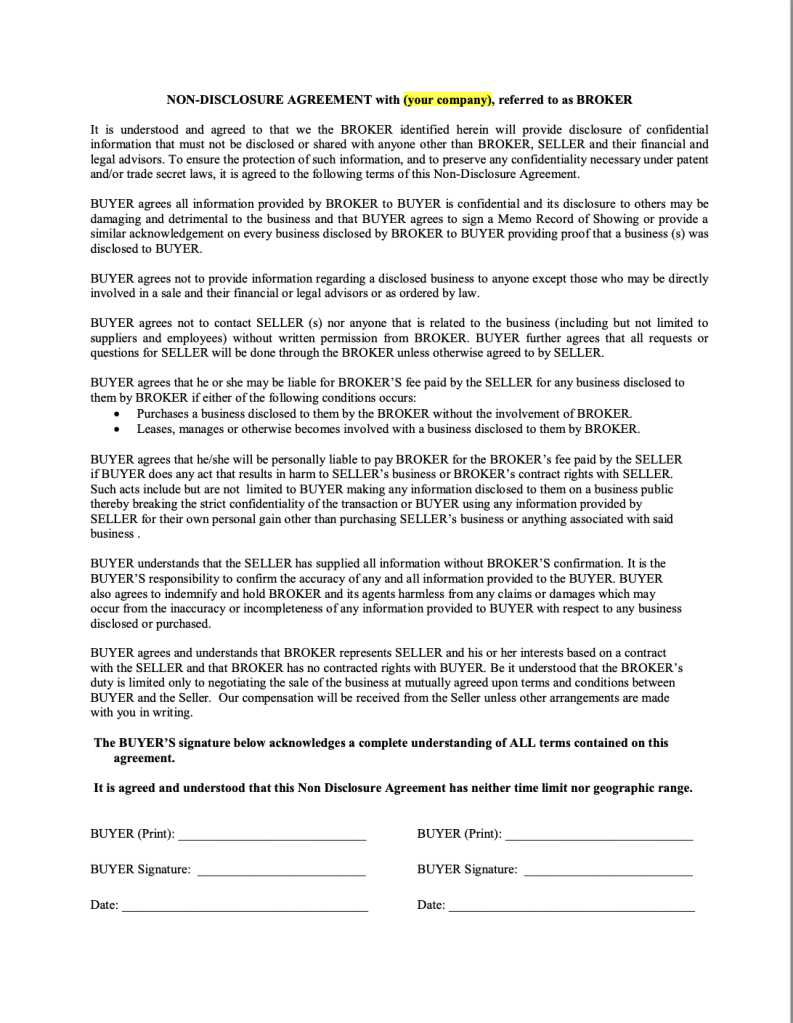
- Protecting Seller Information: When a business is for sale, the seller provides sensitive information to the broker, who may share it with prospective buyers. An NDA asks buyers to use this information only to evaluate the opportunity and not to disclose it to competitors, employees, or others who could harm the business.
- Regulating Buyer Behavior: NDAs often include clauses that prevent buyers from directly contacting the seller, their employees, or suppliers without the broker’s permission. This keeps the broker as the go-between and helps avoid disruptions to the seller’s operations.
- Defining Responsibilities and Liabilities: NDAs often state that the buyer is responsible for verifying the information provided. They may also outline potential liabilities, such as the buyer being responsible for the broker’s fee if they bypass the broker to purchase the business.
- Facilitating Trust: By setting clear rules for handling confidential information, NDAs help sellers feel more comfortable sharing business details, and buyers can explore opportunities with clearer expectations.
Why NDAs Matter to Sellers, Buyers, and Brokers
NDAs are standard in business brokerage because they set expectations for everyone involved. Here’s why they matter:
For Sellers
- Helps Protect Business Value: News of a sale can create uncertainty among employees, customers, or suppliers. An NDA is one tool for keeping the sale confidential while it is underway.
- Protects Proprietary Information: Sellers often share trade secrets, financial data, or customer lists. An NDA gives the seller a legal basis to object if a buyer misuses that information or shares it with competitors.
- Supports a Fair Brokerage Process: NDAs ask buyers to work through the broker, which protects the seller’s relationship with the broker.
For Buyers
- Access to Information: Signing an NDA allows buyers to see detailed business information needed for due diligence, so they can make an informed decision.
- Clarifies Responsibilities: The NDA states the buyer’s obligation to verify information independently, which helps reduce disputes over the data.
- Sets Professional Expectations: By agreeing not to contact the seller directly or disclose information, buyers show respect for the process.
For Brokers
- Supports the Broker’s Role: NDAs ask buyers to communicate through the broker, which keeps the process organized.
- Protects Commission Rights: If a buyer goes around the broker to purchase a business, the NDA may hold them liable for the broker’s fee.
- Builds Trust with Sellers: Using NDAs shows sellers that the broker takes the protection of their information seriously.
Key Elements of an NDA in Business Brokerage
An NDA for business brokerage typically includes components like the following. Wording varies from one agreement to the next:
- Confidentiality Obligation: The buyer agrees to keep all disclosed information private and share it only with financial or legal advisors directly involved in the transaction.
- Non-Contact Clause: Buyers are prohibited from contacting the seller, employees, or suppliers without the broker’s written permission.
- Liability for Breach: The NDA outlines consequences for violating confidentiality, such as liability for the broker’s fee or damages caused to the seller’s business.
- Verification Responsibility: Buyers acknowledge that they must independently verify the information provided, and the broker is not responsible for inaccuracies.
- Term and Scope: Some NDAs have no end date or geographic limit, while others set one. Check how long the agreement lasts and what it covers.
- Broker’s Role: The NDA clarifies that the broker represents the seller’s interests and is compensated by the seller unless otherwise agreed.
What to Do Next
An NDA is one piece of keeping a sale confidential. The rest is deciding who sees what and when. Because NDAs are legal contracts, have an attorney review the specific terms before you rely on them. If you would like to talk through how a confidential sale works, call 615-240-5235. To see where the numbers stand first, the free valuation calculator gives a directional starting range, and How We Value an Owner-Operated Business explains how it is built.
By Michael DeVault, business broker and BBDG Nashville affiliate at BridgePoint Business Group.

